
Report on FAB Meeting with Liverpool City Council, Merseytravel and Merseyside Police
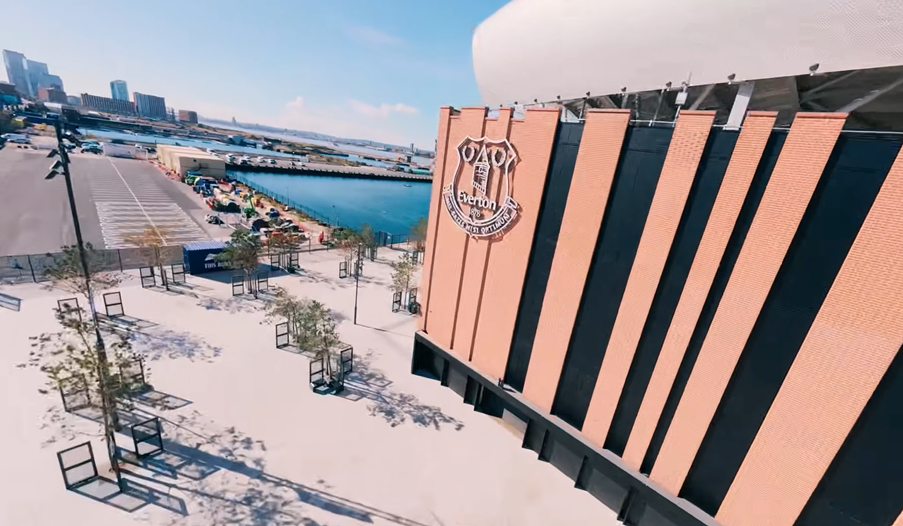
Everton Fan Advisory Board requested a meeting with stakeholders involved in fans' transport and access issues around Hill Dickinson Stadium
Here is our full report on the December meeting.
The meeting included independently elected FAB members and reserved fan group members from the Fans’ Forum and the Supporters’ Clubs Committee. Also in attendance were representatives from LCC, including the Council Leader, Liam Robinson. Members of Merseyside Police included resident Everton FC liaison Officer, Rob Newsham. Also in attendance were members of the LCC Network Management Team, Safer Streets Team. Merseytravel and Merseyrail and the Office of the Regional Mayor and senior Fan Engagement representatives from Everton Football Club.
The meeting started with introductions, led by LCC Leader, Liam Robinson.
FAB Chair, Paul Rigby opened by explaining the reason for calling the meeting, following an earlier meeting between the Club, the FAB and Transport bodies. The FAB did not believe that meeting had been as effective as it could have, due in part to the lack of representation from the Council and they also thought it would have benefitted from attendance by the Police, given the range of subjects fans were concerned about on matchdays, including safety for women and girls at night matches, as well as pedestrian and traffic safety. He reiterated the purpose of the meeting was not to apportion blame, but to discuss solutions, utilising the experiences and suggestions of match-going fans.
Areas covered included public transport, travel, parking, pedestrian ingress and egress through Hill Dickinson Stadium and safety and street lighting.
Travel:
FAB member and Chair of the Supporters’ Clubs Committee, Ken Sweeney, asked what the combined groups’ plans were around transport on matchdays.
The FAB was told that there was an evolving transport plan in place, that falls under the Transport Working Group. The plan includes shuttle buses across four routes – Bootle, Kirkby and two to Liverpool City Centre with an average of eight busses running back and forth on matchdays. The public transport mix also included trains and ferries as well as commercial bus operators (non-shuttle busses). In total, there are 96 forms of entry to the stadium and that the shuttle buses alone carry 7,500 fans to the ground.
Ken said that one of the biggest problems was the lack of combined organisation between the different bus operators. He pointed out that fans are unable to buy a return ticket and had been told that this was because there are two different operators running the service. This, in turn causes delays and frustration amongst fans, who are held up, queuing to buy a return ticket, and a lot of the complaints centre around the time it takes fans to get home, particularly from night games. He urged the bus companies to come to an arrangement on ticket sales, similar to those available with rail companies. Liam Robinson said it was difficult at present, until the operator licences expire and they will be replaced by a franchise model, but that won’t happen until 2027. He said the local authority was not in a position to force bus companies to follow a particular ticket sales model. Once a franchise is established, however, then the local authority will have more say about how tickets and passes can be allocated.
He had made clear to the meeting that he was representing members of supporters’ clubs, who travel to the stadium by coach, and said that they believe congestion problems on the approach are caused by traffic cones from Derby Road/Great Howard Street, through to Regent Road. He said that at the previous match it had taken his coach 20 minutes to travel one mile. He said that, for the Mansfield Town FA Cup game, there had been no cones and that traffic had flowed much more freely and quickly. It was pointed out this wasn’t actually the case for the rest of traffic users, and that there had been an oil spill on the road that day. He pointed out that the one-way system introduced for buses on Boundary Street was not available to buses traveling from the Wirral, because they entered from a different direction. This doesn’t help those buses. He offered some solutions, which LCC said they either had already considered, or, if not, they would consider. The trials at the moment are open for adjustment, according to feedback and results. LCC Network team said they had been working on matchday plans for at least 12 months and there were a number of constraints, including the fact that the speed limit on Derby Road/Great Howard Street is 40mph and this is too fast to accommodate coned management systems, so the speed had to be temporarily reduced on matchdays to 30mph. They said they needed to make lane closures to achieve this. Ken Sweeney asked various members of the team whether they had travelled on the buses on this route. None had and he challenged them to do so. The LCC network team said they had a working group assessing the options and that the current measures were a work in progress.
Paul Rigby reminded the meeting that the reason FAB members were in the room was to give feedback and that they may be able to offer valid solutions. He said the FAB was mandated by the fans and it can help, if engaged through ongoing communications. Liam Robinson said he agreed with this.
LCC said that if they feel stripping the lane closures will work, then they will do this. They are, however, satisfied that there needs to be cones at Sandhills, as this now directs car drivers to where they can safely drop off and pick up. Without the cones, they believe this wouldn’t be possible and would cause congestion and a risk to passengers entering and leaving the station.
The meeting was told they had run trials for different bus routes, travelling towards Bootle and could possibly introduce a new route, but that this would require legislative changes and they would need to go through consultation, so some changes could not happen quickly.
Ken Sweeney then asked Mersey Rail what numbers it had used in its modelling. They said they had trialled around 5,000 per hour on trains, but were now getting 10,000, requiring 24 trains an hour. They have 53 trains for the whole network and at any time, some are out of service, for maintenance. They believe this service compares well against other Premier League clubs and waiting times against tube stations serving Premier League football clubs.
They currently have a mixture of four and eight carriage trains, but in reality, the only station that cannot accommodate eight carriages is Cressington. When they have to lay on more eight-carriage trains they have to lay on replacement buses from Cressington station. Ken Sweeney said fans are complaining of four-carriage trains driving past them on platforms, as they are already full. Mersey Rail said that they had a total of 10 eight-carriage trains, but they would consider bringing in more from the Wirral, if needed.
FAB Secretary, Julie Clarke said that, whilst travel companies and authorities were saying they wanted fewer fans to bring cars in on matchdays, this would not be possible, if there was no public transport alternative for some. She reminded the group about the fans who travel, due to not having a public transport option. She said that blue badge holder had lost some of the spaces they previously used, due to the introduction of the new one-way system for buses and this would be better received if they could see it was yielding results, but she doesn’t believe it is doing so at the moment. Ken Sweeney asked the Network team to produce a clear map, showing exactly where blue badge parkers could park, rather than just maps, showing where they could not park. They committed to do this. Paul Rigby told the meeting that fans required confidence in public transport and it is not established yet. He urged the groups to keep speaking to fans.
Chair of the Fans’ Forum, Barry Williams asked what plans the Council had before the new bus franchise system comes in, in 2027. Liam Robinson said they cannot plan for changes before that of their own volition, as the current operators are private companies, but that LCC will listen and look for solutions with the bus companies, although he could make no promises. He also asked about ongoing plans to clear Sandhills within one hour, once fans start to arrive at the station after matches. LCC said that their most recent monitoring operation showed the station cleared to normal levels within 1 hour and 10 minutes. He then asked for the statistics to be shared with the Fans’ Forum. He asked both LCC and the travel companies to put out notices, to let fans know what arrangements there would be, including changes, for the upcoming match on the evening of 20 December. They said they would and always do, but confirmed they would be using all of their eight-carriage trains on that day, as it was clear it would be extremely busy, not just because of the football match, but due to Christmas shoppers and revellers on the final Saturday, so they were considering borrowing other carriages from the Wirral services. They would be laying on a bus service for Cressington passengers, if they could not facilitate four-carriage trains.
Safety:
Julie Clarke said she led on the focus group ‘Women Watching the Men’s Game’, made up of female supporters from the FAB and its reserved groups, including the Women’s Supporters Club, the Fans’ Forum, EDSA and a representative from ‘Her Game Too’. The group is Everton-specific and formed following an initiative by the Premier League and White Ribbon Campaign. It holds meetings, facilitated by Everton’s DEI Lead and discusses concerns around the safety and wellbeing of women and girls who watch the men’s game, both home and away. She said there were a number of concerns, including the crowding, but by far the biggest problem was leaving the ground after night games and winter afternoon games, when it is dark.
She said the darkened streets had already resulted in women, especially those who attend the match alone and those bringing children, not wanting to attend matches that ended in the dark, due to the nervousness they are experiencing. Some are re-considering renewing their season tickets and some definitely will not return next season.
Ken Sweeney recounted the experience of one of the elderly fans from his supporter club coach getting disorientated and lost on his way back to the bus. A number of fans got off to go to look for him and they complained it was so dark they were using mobile phone torches and that they themselves felt nervous. The elderly man was extremely distressed by the time he was found.
Julie Clarke said she recognised the fact that the Council has recently spent around £1.8m on a project to update lights in the North Docks Neighbourhood, but was disappointed to learn that this had only been an upgrade to existing “smart light” LED operations and had not included any plans for new lights to also be erected. The area around Regent Road, with the exception of main thoroughfares, is extremely poorly lit, if at all and the sidewalks – where they exist – are in very poor condition, due to years of under-use, or even no practical use. She asked firstly, for a commitment that the operation of the new smart lights, which are designed to be eco-friendly and to be dimmed at night time, would not result in lights turned down, or off, on matchdays and nights. She was given an assurance by LCC that this would not be the case. She then asked whether there were any plans to erect new lamps around Regent Road. Liam Robinson said there were none, currently.
She said that there has, and will be, significant sums invested throughout the UK and Ireland in the run up to the Euro 2028 tournament, to the tune of £557m and that some of this would be destined for Liverpool, as HDS was a designated venue. As well as this, there is also a £45m social impact fund, beginning in 2026, just announced by the DCMS. It is also likely that the £500m, announced in the November budget, to be distributed amongst six mayoral authorities in the North of England, would include Liverpool City Region. She asked whether the CEO and the Council Leader would consider ring-fencing some of this cash to provide additional street lighting. Liam Robinson said he was happy to look at the proposal. She also asked Merseyside Police whether there was a regular order to line the routes with uniformed officers between the Stadium gates, going northwards, to Sandhills station, and southwards to Moorfields station, particularly in the area which tended to become ‘crushed’ at the Bascule Bridge after the match and was often particularly uncomfortable for women. They confirmed that they do this, and would pay particular attention to the Bridge area.
At the conclusion of the meeting, all sides committed to better communications and the FAB/Fan groups confirmed they were happy to share and post information provided by the City, the travel companies and the Police, which would assist fans on matchdays, whenever they were given it.